The Winter Phone Call
Every November, my phone starts ringing.
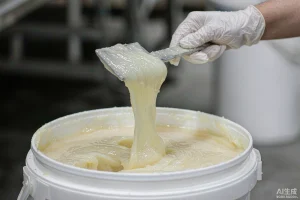
“Master, my shampoo turned into white jelly!”
“Master, the dish soap has crystals at the bottom!”
Don’t panic. This is chemistry, not magic.
Why Does It Happen?
Surfactants like SLES and AOS hate the cold.
Every surfactant has a “Kraft Point” or “Cloud Point.”
Below a certain temperature, they stop being dissolved. They want to become solid again.
For many cheap formulas, this happens around 10°C or 15°C.
Solution 1: The “Anti-Freeze”
Just like a car radiator, you need anti-freeze.
Urea: Cheap and effective. Helps keep things liquid.
SXS (Sodium Xylene Sulfonate): This is a “hydrotrope.” It forces the surfactant to stay dissolved. It also clarifies the liquid.
Alcohol (Ethanol): Works well, but smells like alcohol and can thin the product too much.
Propylene Glycol: Good for cosmetics, but expensive for dish soap.
Solution 2: Adjust the Formula
Some surfactants are better in winter.
AOS vs. LAS:
LAS (Linear Alkylbenzene Sulfonate) often needs high pH or warm water.
AOS is generally more soluble in cold water than LAS paste.
Add Non-ionics:
Adding a bit of AEO-9 or CMEA can sometimes help stabilize the system, but test it first.
Solution 3: The Low-Tech Fix
If your product is already cloudy in the bottle…
Just warm it up.
Tell your customers: “Store at room temperature.”
It usually goes back to clear when it gets warm (reversible).
If it doesn’t go back to clear, you have a permanent stability problem (separation).
Buying Tips for Winter
If you are in a cold region (like North China, Russia, Canada):
Ask your supplier for “Winter Grade” materials.
Some factories sell SLES with lower dioxane or specific blends that handle cold better.
Or, buy the high-concentration paste and dilute it immediately with warm water in your heated tank.
The Bottom Line
Winter creates cloudiness.
You have two choices:
- Keep your warehouse warm (expensive energy).
- Add SXS or Urea to your formula (expensive ingredients).
Calculate which one costs less.