| Item | Value |
|---|---|
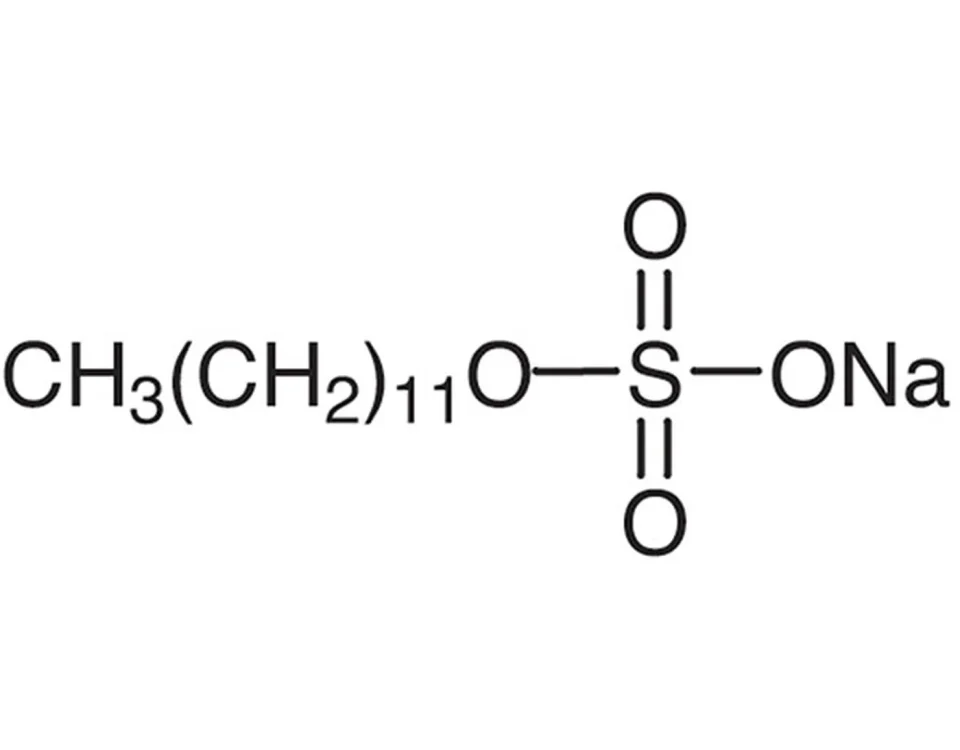
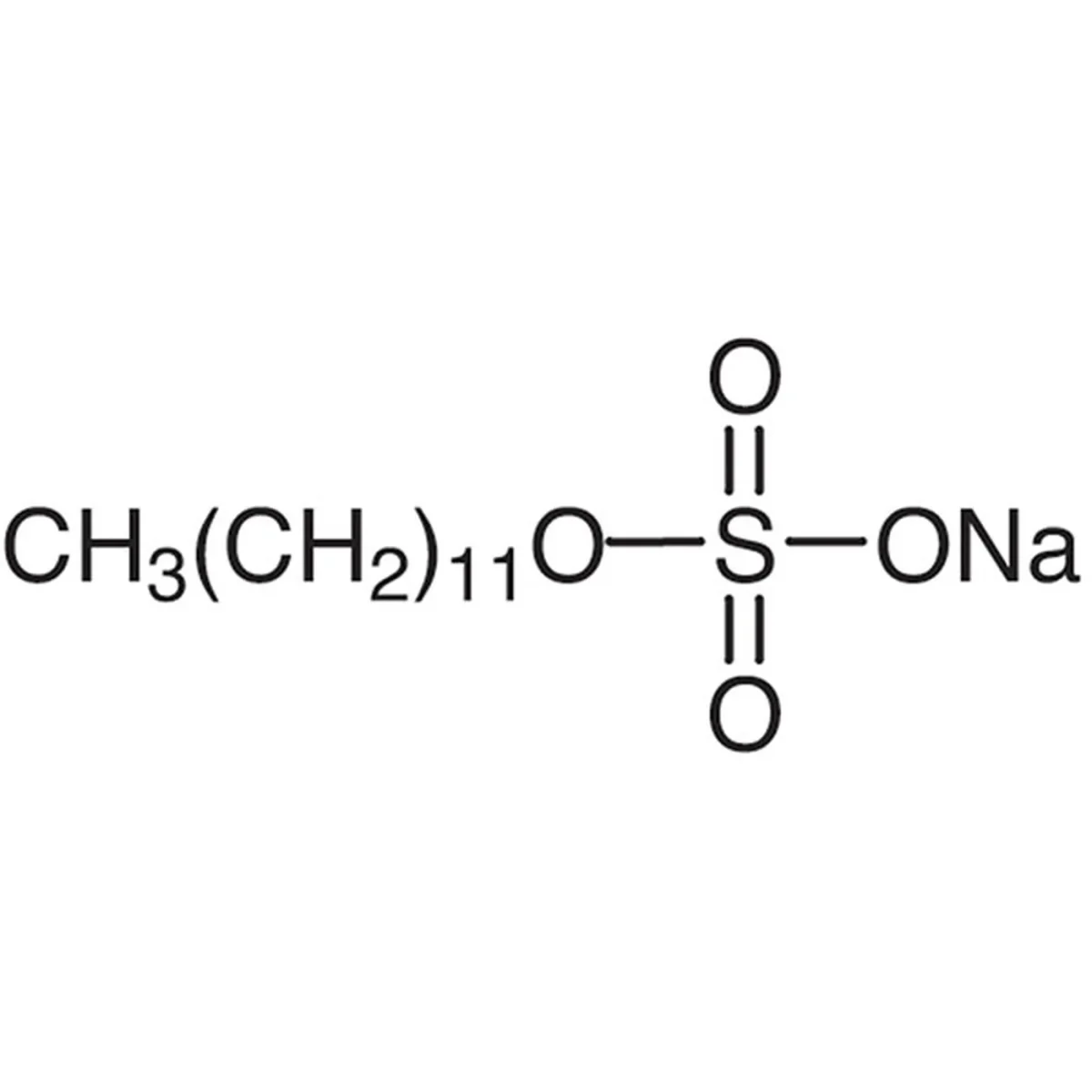
| Reagent identity | C12H25NaO4S, CAS 151-21-3 |
| Molar mass | 288.38 g/mol |
| Assay grades (illustrative) | 97-99% |
| CMC / Krafft (literature) | approx. 8 mmol/L / approx. 16 °C |
| Documents | TDS, lot COA, MSDS on request |
For reagent pricing and MOQ, request a quote with your pack size and assay target, and request a sample for method validation.
Short answer: As a laboratory chemical, SDS is the sodium salt of dodecyl hydrogen sulfate: C12H25NaO4S, CAS 151-21-3, molar mass 288.38 g/mol. It is an anionic detergent used to denature proteins, lyse cells and build surfactant systems. ORID Chem supplies 97% and 99% assay grades with a lot COA, TDS and MSDS.
Key takeaways
- The reagent chemical is C12H25NaO4S, CAS 151-21-3, molar mass 288.38 g/mol.
- SDS on a label can mean the surfactant or a Safety Data Sheet, so check the formula.
- Protein denaturation and lysis depend on a consistent, high assay.
- Dissolve in warm water under gentle stirring to avoid a hydrated gel layer.
- A lot COA with a named assay method is the document that qualifies a reagent grade.
Identifying the chemical on a reagent bottle
A laboratory label should show the full chemical name, CAS 151-21-3, the formula and the assay. The abbreviation SDS alone is ambiguous, since it also stands for Safety Data Sheet. Check the formula before you weigh anything: C12H25NaO4S is the non-ethoxylated sulfate ester, while an ethoxylated product carries a different formula and CAS.
Physical and chemical data used in method work
The table gives working values commonly used when a buffer is written up. Molar mass and formula are fixed for the substance; assay, pH and impurity lines are grade-dependent and illustrative. Confirm each against the current TDS and the lot COA.
| Property | Value | Status |
|---|---|---|
| Formula | C12H25NaO4S | Fixed |
| Molar mass | 288.38 g/mol | Fixed |
| CAS | 151-21-3 | Fixed |
| Assay, reagent grades | 97-99% | Illustrative, grade-dependent |
| CMC in water at 25 °C | approx. 8 mmol/L | Literature value |
| Krafft point | approx. 16 °C | Literature value |
What the chemical does in protein and cell work
The dodecyl tail binds to hydrophobic regions of a polypeptide while the charged head stays in solution. Proteins unfold and take on a roughly uniform negative charge per unit mass, which is the basis of SDS-PAGE. In lysis buffers the same action disrupts membranes. Both uses depend on a consistent assay, so a general detergent grade is a poor substitute for method work.
Preparing a stock solution without lumps
Add powder to warm water under gentle stirring rather than dumping a full weigh-out into a cold beaker. Needle powder hydrates at the surface and can form a gel layer that traps dry material inside. Prepare a 10% working stock if your protocol allows it, and let it reach room temperature before use. Our note on CMC and Krafft point explains why cold water slows dissolution.
Reagent grade versus detergent grade in one table
The molecule is identical. What changes is how tightly the impurities are controlled and how the lot is documented. Choose the grade from the sensitivity of your method, not from the product name.
| Aspect | Reagent use | Detergent plant use |
|---|---|---|
| Typical grade | SDS 99% | SLS 92% |
| Critical limits | Salt, unsulfated matter, moisture | Active matter, foam |
| Pack size | Small container or 25 kg bag | Palletised 25 kg bags |
| Documentation | Lot COA with impurity lines | TDS and per-shipment COA |
| Buying basis | Method reproducibility | Cost per kg active |
Storage, handling and documents for a chemical order
Keep the container closed and dry, away from direct heat. Powder is dusty, so handle it with the exposure controls in the MSDS. Contact our team with your pack size, assay target and destination; we will confirm current packing, MOQ and lead time. Our titration guide helps align the assay method on the COA with your incoming QC.
The same catalogue also lists SLS 30% solution, SLS 93% powder, SLS 94% powder, SDS 97%.
Assay method matters
Two-phase and direct potentiometric titration can return different active-matter values on the same lot. State the method when you request a COA so the number is comparable.
Frequently asked questions
Is the SDS chemical the same substance as SLS powder?
Yes. Sodium dodecyl sulfate and sodium lauryl sulfate both describe CAS 151-21-3. Reagent and detergent grades differ in purity and documentation, not in molecular identity.
What molar mass should I use for a 10% stock solution?
288.38 g/mol for the pure substance. If the grade is 99% active, divide the target molar amount by 0.99 before weighing, and confirm the lot assay.
Why is my SDS solution cloudy in a cold room?
Below the Krafft point the surfactant crystallises rather than forming micelles. Warm the stock gently and hold it above that temperature; the change is usually reversible.
Can I use a general detergent grade for cell lysis?
It often works but batch-to-batch salt and unsulfated matter can shift results. Use SDS 99% for reproducible method work and validate the first lot.
Which documents should I request?
A TDS, a lot COA with assay, pH and impurity lines, and the current MSDS. Request the COA/MSDS with your pack size and assay target.
Request a quote or a sample
For reagent and bulk pricing, MOQ and lead time on CAS 151-21-3, request a quote with your assay target and pack size. Request a sample for method validation and request the COA/MSDS before ordering.
Written and reviewed by the ORID Chem technical team. Last updated: 20 November 2026. Figures marked illustrative are working values, not quotations. Confirm current specifications on the product TDS and lot COA before ordering.