| Item | Value |
|---|---|
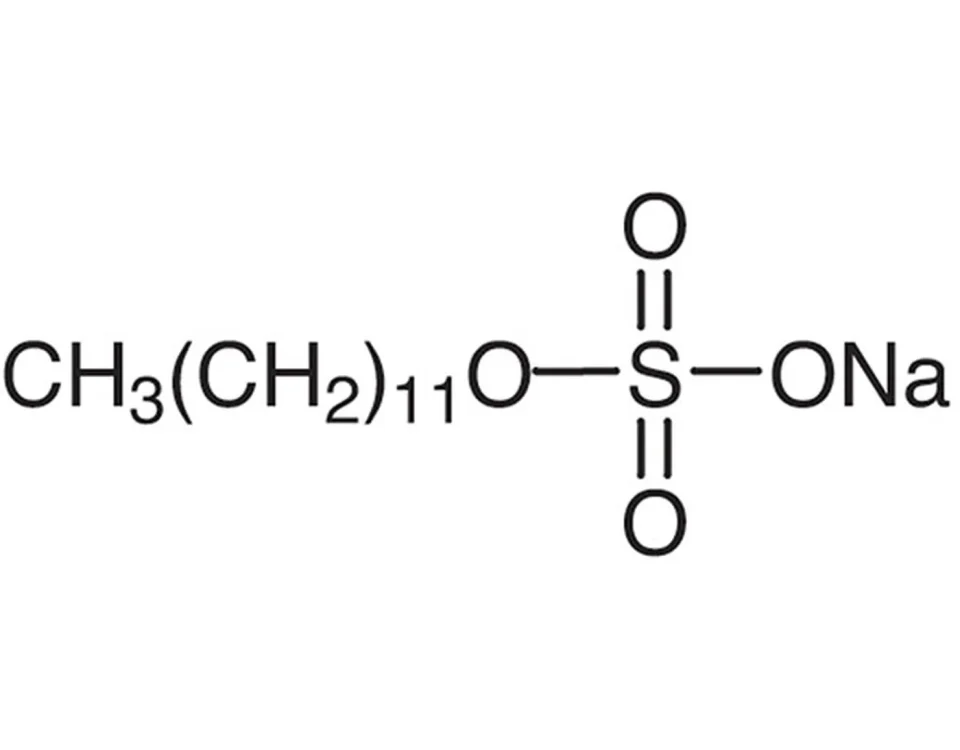
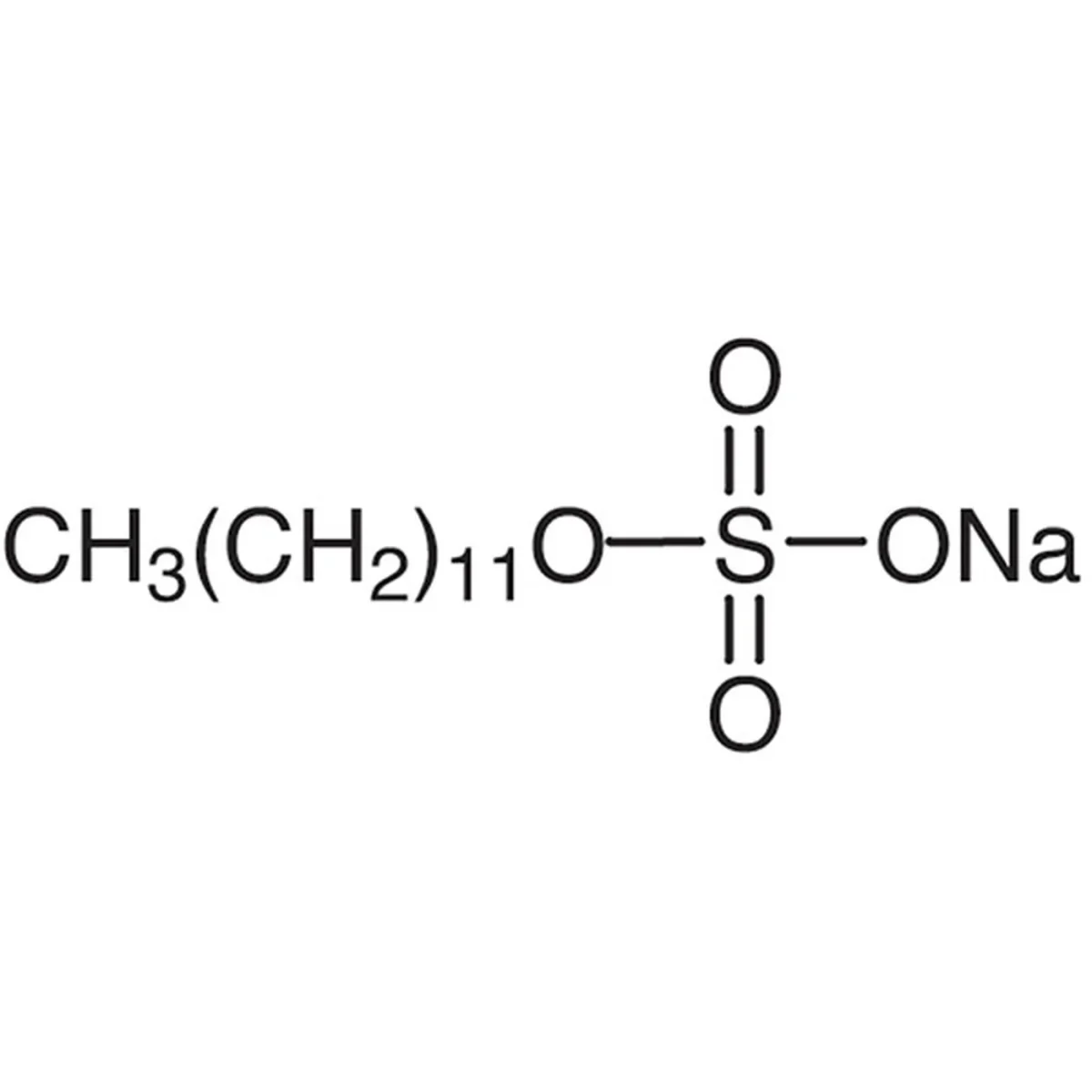
| Salt | Sodium dodecyl sulfate, CAS 151-21-3 |
| Counterion | Na+ (lithium salt: 2044-56-6) |
| Molar mass | 288.38 g/mol |
| Krafft point (literature) | approx. 16 °C |
| Forms | Needles, fine powder, 30% solution |
For bulk pricing, MOQ and lead time on the sodium salt, request a quote with your temperature range, and request a sample for dissolution trials.
Short answer: Dodecyl sulfate sodium salt is the sodium counterion form of the C12 alkyl sulfate ester, CAS 151-21-3, formula C12H25NaO4S and molar mass 288.38 g/mol. Sodium is the standard choice for cost and foam. Lithium or ammonium salts behave differently in cold water. ORID Chem supplies 92-99% powder grades.
Key takeaways
- The sodium counterion balances the C12 sulfate anion under CAS 151-21-3.
- Sodium gives dense foam at low cost; lithium changes cold-water behaviour.
- The Krafft point in the teens Celsius limits cold storage of clear concentrates.
- Needle, fine powder and 30% solution are the same salt in different physical forms.
- Confirm the counterion from the formula and CAS, not from the abbreviation SDS.
What the sodium counterion actually does
The surface-active part of the molecule is the dodecyl sulfate anion. Sodium balances its charge and influences how tightly the ions pack in the solid state and how readily the salt dissolves. It is abundant, inexpensive and gives dense foam in most detergent systems. Changing the counterion leaves the tail and head group intact but shifts solubility at low temperature.
Counterion comparison for the same C12 anion
The table compares salts of the same dodecyl sulfate anion. Molar mass changes with the counterion; low-temperature solubility is the practical reason a formulator would switch. Values are literature or illustrative, not specification commitments.
| Salt | Counterion | CAS | Molar mass (g/mol) | Why it is chosen |
|---|---|---|---|---|
| Sodium dodecyl sulfate | Na+ | 151-21-3 | 288.38 | General foam and detergency |
| Lithium dodecyl sulfate | Li+ | 2044-56-6 | 272.33 | Low-temperature electrophoresis |
| Magnesium dodecyl sulfate | Mg2+ | 3097-08-3 | Varies with stoichiometry | Specialty systems |
| Potassium dodecyl sulphate | K+ | 4706-78-9 | 304.48 | Specialty systems |
Solubility and Krafft point in practical terms
The sodium salt dissolves well in warm water but has a Krafft point in the teens Celsius in published work. Below that temperature the hydrated crystal is the stable form, so a clear concentrate turns cloudy and the surfactant stops forming micelles. This matters for a 30% liquid grade stored in an unheated warehouse. Our CMC and Krafft point note sets out the formulation arithmetic; LDS is the usual alternative for cold runs.
Solid forms of the sodium salt
Needle and fine powder are the same salt in different physical forms. Needles flow better through a hopper and raise less dust; fine powder dissolves faster but needs better extraction at the feed point. A 30% aqueous solution removes dissolution entirely at the cost of shipping water. Our powder grades and SLS 30% solution cover both routes.
| Form | Handling note | Typical buyer |
|---|---|---|
| White needles | Lower dust, good flow | Dry blending plants |
| Fine powder | Fast dissolution, use extraction | Analytical and small-batch work |
| 30% aqueous solution | No dissolving step | Liquid detergent lines |
Specification lines that confirm the counterion
Check the formula and CAS on the TDS, then the assay, pH of a 1% solution, inorganic salt and moisture on the lot COA. A quote that lists only SDS without a formula leaves the counterion ambiguous between the surfactant and a safety document. Our guide to anionic active matter explains the assay line, and contact our team can supply a sample for method validation.
Sodium sulfate is not the same salt
Sodium sulfate is an inorganic process residue in lower-assay grades. Sodium dodecyl sulfate is the surface-active salt. Both appear on a COA, in different lines.
Choosing the salt for your process
For laundry powder, toothpaste and shampoo the sodium salt is the default. For electrophoresis at low temperature consider LDS. For a liquid line consider SLS 30% and count the freight on water. Contact our team with your temperature range, grade target and port to confirm current packing, MOQ and lead time.
Frequently asked questions
Is dodecyl sulfate sodium salt the same as SDS powder?
Yes. The name simply makes the counterion explicit. CAS 151-21-3 and formula C12H25NaO4S are unchanged.
Why would I choose lithium dodecyl sulfate instead?
It stays soluble at lower temperatures, which helps electrophoresis runs in a cold room. LDS carries CAS 2044-56-6 and a lower molar mass.
What causes cloudiness in a stored 30% solution?
Crystallisation below the Krafft point. Warm the tank gently and hold it above that temperature; check the recommended storage range on the TDS.
Does sodium sulfate on a COA mean the wrong salt was shipped?
No. Sodium sulfate is an inorganic residue from manufacture, reported separately from active matter. It is one of the impurities that a high-assay grade reduces.
Which grade suits a dry blending plant?
SLS 92% needles for general work, or SLS 94% where a tighter salt and colour window is needed. Request a sample and check the lot COA.
Request a quote or a sample
For bulk pricing, MOQ and lead time on CAS 151-21-3 sodium salt grades, request a quote with your assay target and port. Request a sample for dissolution trials and request the COA/MSDS before the first shipment.
Written and reviewed by the ORID Chem technical team. Last updated: 20 November 2026. Figures marked illustrative are working values, not quotations. Confirm current specifications on the product TDS and lot COA before ordering.