| Item | Value |
|---|---|
| CAS index key | 151-21-3 |
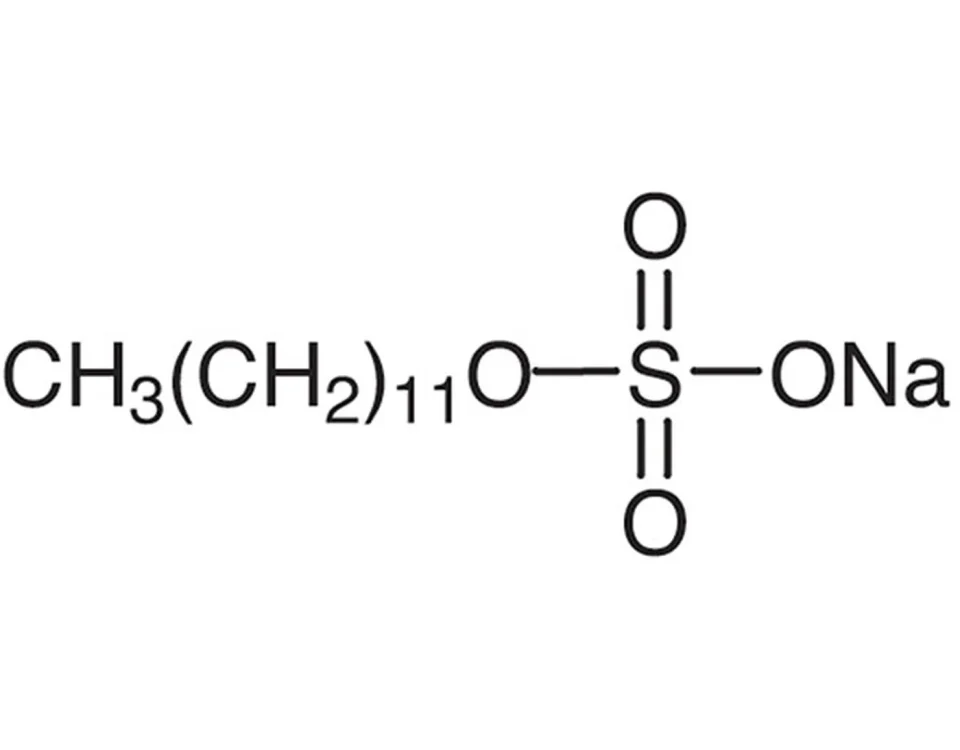
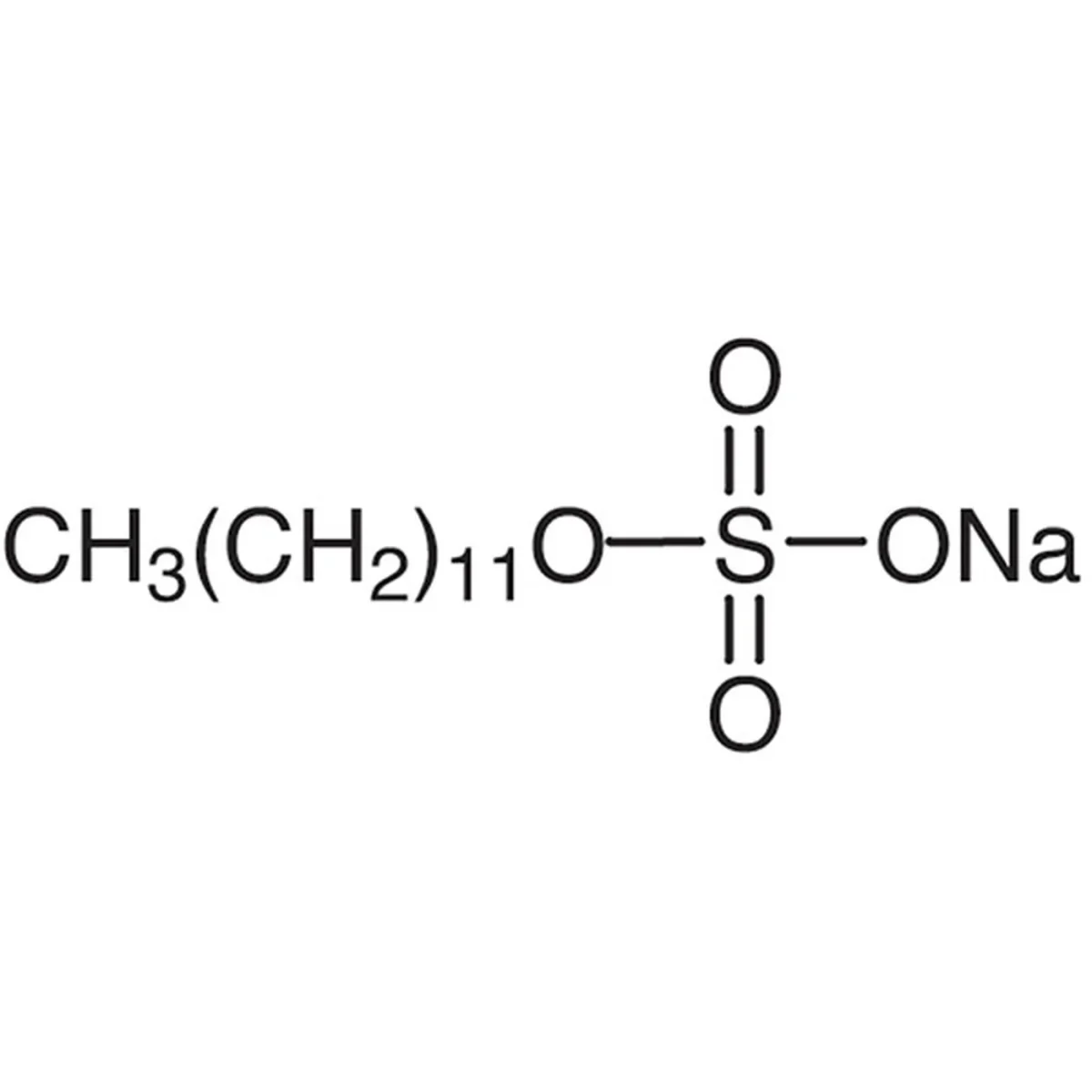
| Formula | C12H25NaO4S |
| Grades under this entry | 92%, 93%, 94%, 97%, 99%, 30% solution |
| Not covered by this CAS | SLES 68585-34-2, AOS 68439-57-6, LDS 2044-56-6 |
| Document set | TDS, lot COA, MSDS |
To compare grades under one registry number, request a quote with your assay target, or request a sample for QC validation.
Short answer: Search by CAS 151-21-3 when you need one substance and not a family of lookalikes. The index entry covers C12H25NaO4S only: a linear dodecyl sulfate ester with sodium as counterion. It excludes ethoxylated sulfates, olefin sulfonates and lithium salts. ORID Chem lists matching powder grades from 92% to 99% active matter.
Key takeaways
- CAS 151-21-3 is the reliable index key for C12H25NaO4S.
- The abbreviation SDS also means Safety Data Sheet, so a name search mixes documents with products.
- Several assay grades and one 30% solution all sit under the same registry row.
- Assay, pH, unsulfated matter and moisture are lot-level values, not CAS data.
- Confirm packing, MOQ and the document set separately from the substance identity.
Why a CAS lookup beats a name search
Trade names drift between industries. A distributor may call the same powder SLS, a laboratory catalogue calls it SDS, and a formulation sheet may use an older lauryl name. A CAS index has one row per substance, so it cuts through that variance. Enter 151-21-3 and the result is C12H25NaO4S, molar mass 288.38 g/mol, EC 205-788-1.
Substances that a loose SDS search pulls in
The letters SDS are also the standard abbreviation for a Safety Data Sheet, so a plain text search mixes product pages with document pages. Adding the CAS number narrows it. The table below lists the entries buyers most often confuse with 151-21-3 when they source several anionic surfactants at once.
| Search term | CAS returned | What it actually is |
|---|---|---|
| sodium dodecyl sulfate | 151-21-3 | C12 sulfate ester, sodium salt |
| sodium laureth sulfate | 68585-34-2 | Ethoxylated sulfate |
| lithium dodecyl sulfate | 2044-56-6 | Same anion, lithium counterion |
| sodium C14-16 olefin sulfonate | 68439-57-6 | Sulfonate, longer chain |
| SDS safety data sheet | Not a substance | A 16-section document |
Grade mapping under a single CAS entry
One registry row covers a wide assay spread. Needle powders suit dry blending and sachet lines, high-purity powders suit analytical work, and a 30% aqueous solution skips the dissolving step in liquid detergent plants. All of them carry 151-21-3 on the TDS.
| Grade | Active matter (illustrative) | Form | Where it is chosen |
|---|---|---|---|
| SDS 99% | 99% min | Fine powder | Electrophoresis, reagent use |
| SDS 97% | 97% min | Fine powder | Analytical work |
| SLS 94% | 94% min | White needles | Shampoo, shower gel |
| SLS 92% | 92% min | White needles | Industrial detergent |
| SLS 30% | 30% min | Clear liquid | Liquid detergent blending |
Reading a CAS-indexed TDS line by line
Start with the substance name and CAS, then the formula and molar mass. Move to active matter, pH of a 1% solution, unsulfated matter, sodium sulfate and moisture. Those are the lines that change between lots. Illustrative ranges for our needle grades are 92-95% active and a 1% solution pH of 7.5-9.5; every binding figure is on the lot COA. Our titration method comparison explains the assay line.
Dose arithmetic once the CAS is confirmed
A formula requiring 10 kg of active surfactant needs about 10.9 kg of 92% powder or 33.3 kg of a 30% solution. The CAS number confirms you are dosing the right molecule; the assay converts that into a weigh-out. Our worked example on cost per kilogram of active matter applies the same conversion to freight, and coloured SLS needles follow the identical calculation.
What a CAS lookup cannot tell you
It says nothing about assay, particle size, packing or lot quality. Two suppliers can quote the same CAS number with different unsulfated matter and different caking behaviour. Confirm the commercial terms separately: illustrative 25 kg kraft bags or fibre drums, one-tonne MOQ, with TDS, lot COA and MSDS issued per shipment. Contact our team with your port and required assay.
Frequently asked questions
Is CAS 151-21-3 valid for both SLS and SDS?
Yes. The two names describe one substance. A CAS lookup returns a single row, which is why procurement teams use the number instead of a trade name.
How do I tell a product page from a Safety Data Sheet in search results?
Add 151-21-3 to the query. Product and specification pages quote the number with a formula and assay; document pages describe 16 sections and a revision date.
Can two suppliers quote the same CAS with different quality?
Yes. The registry identifies the molecule. Assay, salt content, unsulfated matter and particle size are supplier-specific and belong on the COA.
Does the 30% solution carry the same CAS number?
The dissolved surfactant does. Water is a separate component of the formulation, so the TDS lists the CAS for the active substance and states the solution concentration separately.
Which grade should I request first for a liquid detergent line?
Usually SLS 30% solution to skip dissolution, or SLS 92% powder if you blend dry. Both are illustrative starting points; confirm against your batch size.
Request a quote or a sample
For bulk pricing, MOQ and lead time on CAS 151-21-3 grades, request a quote with your target assay and port. Request a sample for QC validation and request the COA/MSDS before the first shipment.
Written and reviewed by the ORID Chem technical team. Last updated: 20 November 2026. Figures marked illustrative are working values, not quotations. Confirm current specifications on the product TDS and lot COA before ordering.