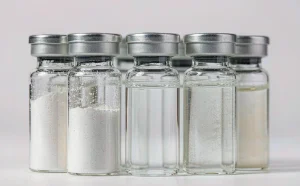
Short answer: Sodium lauryl sulfate (SLS, CAS 151-21-3) is an anionic surfactant used wherever foam, detergency, wetting or emulsification is needed. The main industrial uses are detergents and personal care, construction additives, papermaking, textile and plastic auxiliaries, leather processing, pharmaceutical and agrochemical formulations, firefighting foam, and mineral flotation. Bulk buyers usually meet it as 92–95% active powder in 20 kg bags, or as a 30% solution in 200 kg drums and 1000 kg IBCs.
This guide maps where SLS is actually consumed, with the numbers that matter at the purchasing stage: active content by grade, packaging formats and container loads. The specification data below reflects standard commercial product data for SLS (CAS 151-21-3). If you are choosing between grades rather than industries, read SLS 92 vs 93 vs 94 vs 95: which active content do you need first.
What is sodium lauryl sulfate?
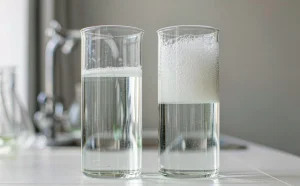
SLS is the sodium salt of lauryl sulfate, a C12-dominant alkyl sulfate with molecular formula C12H25NaO4S and molecular weight 288.38. In water it forms a translucent solution and works as a foaming, wetting, emulsifying and dispersing agent. Commercial grades differ mainly in active matter: 92%, 93%, 94% and 95% powders, high-purity SDS at 97–99%, and a 30% aqueous solution. The melting point sits around 180–185 °C with decomposition, which keeps powder handling straightforward at ambient temperature.
It mixes with other anionic and nonionic surfactants without special precautions, and it is regarded as readily biodegradable. Both properties explain why it survives in formulas that have replaced older surfactants on other grounds.
Which industries use SLS?
Detergents and personal care
The largest single use. SLS compounds with LABSA (linear alkylbenzene sulfonic acid) at roughly 1:3 to build the surfactant base of toothpastes, shampoos, dishwashing liquids and heavy-duty powders. It delivers dense, stable foam at a low cost per kilogram of active matter, so it stays the default foam booster even in formulas built on milder primary surfactants. Formulators comparing options can start from primary surfactants for powder and liquid detergents.
Construction materials
In plasterboard, SLS works as a foaming and air-entraining additive: controlled air content lowers board density and improves insulation. In concrete admixtures and coatings it functions as a dispersant and wetting agent, helping particles separate and spread.
Papermaking
Paper mills use SLS in three places. As a cooking penetrant it helps liquor soak into chips during pulping. In mill effluent it assists flocculation. And in waste paper deinking its detergency loosens ink particles from fibers so they can be washed or floated out.
Textiles and plastics
As a textile auxiliary, SLS wets and disperses in scouring and dyeing baths, which shortens wet-out time on dense fabrics. In plastics it serves as an emulsifier in emulsion polymerization, including PVC and acrylic lattices.
Pharmaceutical and agrochemical formulations
SLS appears as a processing aid and excipient in tablets and creams, and as a wetting-dispersing agent in pesticide formulations. Buyers in these channels work with high-purity grades (97% and above) and put the certificate of analysis ahead of price in the first exchange.
Leather
Tanneries use SLS as a wool detergent in raw wool processing and as a wetting agent in leather softening and degreasing.
Firefighting
SLS is a component of foam concentrates for oil-well fires and firefighting equipment, where it stabilizes the foam blanket that smothers flammable-liquid fires.
Mining and ore dressing
In flotation circuits, SLS acts as a foaming agent for mineral slurry, carrying target minerals into the froth phase for separation.
Grade, form and typical use
| Grade | Form | Typical active matter | Where it fits | Standard packaging |
|---|---|---|---|---|
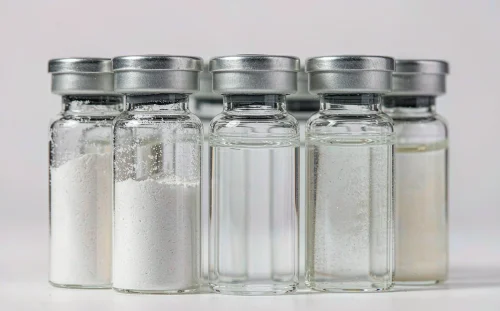
| SLS 30% | Clear to pale liquid | 30% | Liquid detergent plants that prefer pumping over bag handling | 200 kg drum, 1000 kg IBC |
| SLS 92% | White powder or needles | 92% | General detergents, textile auxiliaries, construction additives | 20 kg bag |
| SLS 93% | White powder or needles | 93% | Toothpaste, shampoo, mid-spec detergents | 20 kg bag |
| SLS 94% | White powder or needles | 94% | Higher-spec personal care and detergent formulas | 20 kg bag |
| SLS 95% | White powder or needles | 95% | Premium detergents, formulations that buy active matter, not powder | 20 kg bag |
| SDS 99% | White powder | 99% | High-purity work: pharma processing aids, laboratory use | 20 kg bag, 25 kg carton |
| SDS 97% | White powder | 97% | Electrophoresis and biochemistry workflows | 20 kg bag, 25 kg carton |
| Colour needles | Coloured needles | 92–95% | Toilet blocks, decorative detergent bars | 20 kg bag |
How is bulk SLS packed and shipped?
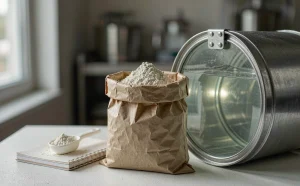
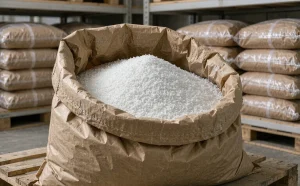
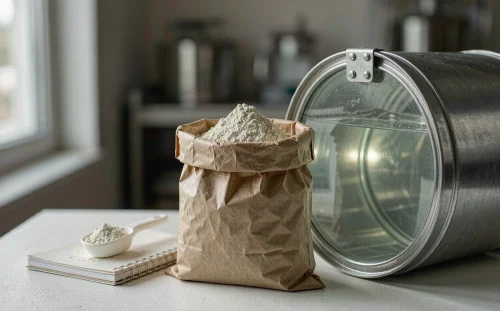
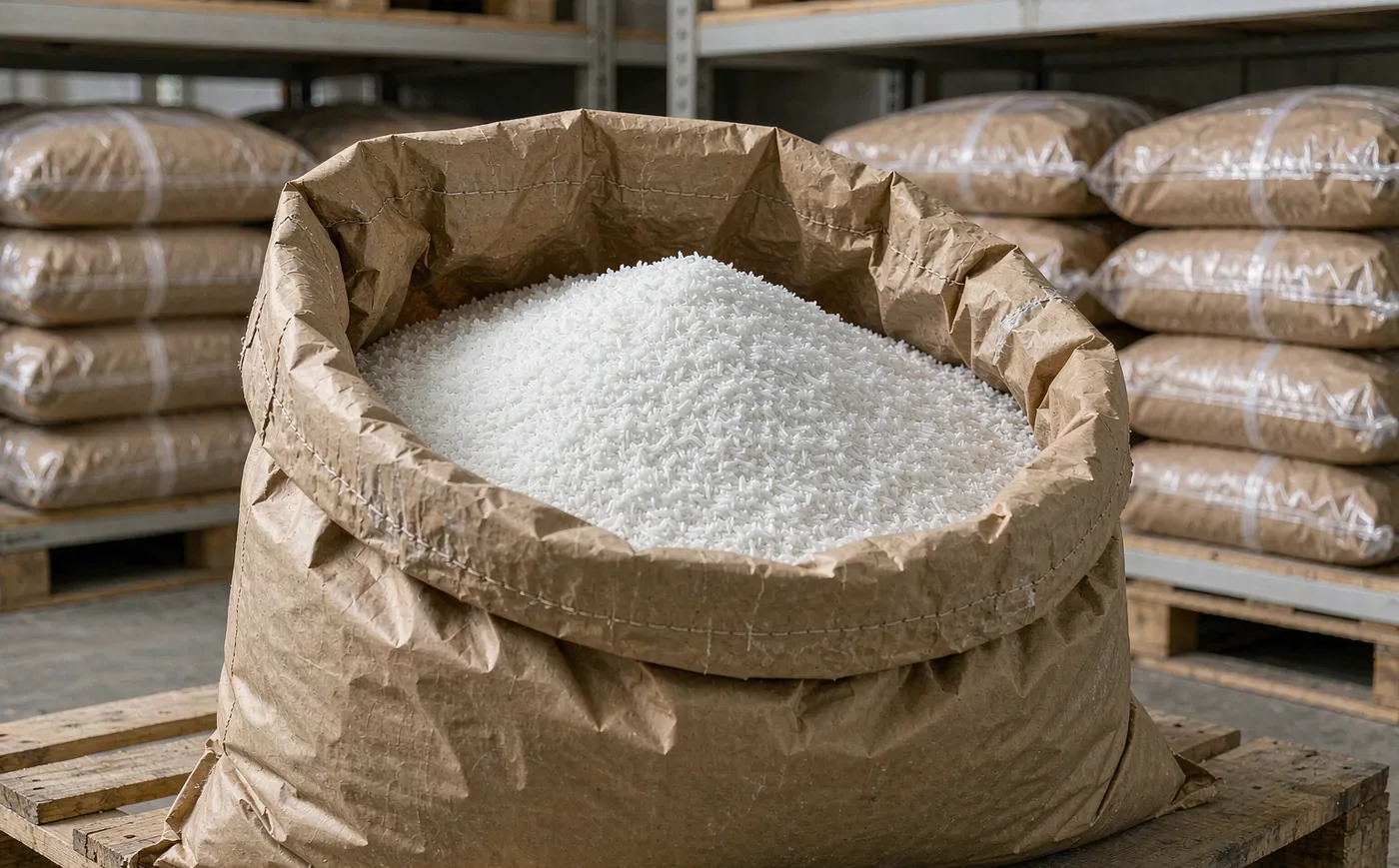
Powder ships in 20 kg kraft-paper bags with a PE liner. A 20′ FCL takes 525 bags, about 10.5 MT, palletised; floor-stacked loads run around 400 bags, about 8 MT. The 30% solution moves in 200 kg plastic drums at 80 drums per container, roughly 16 MT, or in 1000 kg IBCs at 18 units per container, roughly 18 MT.
Storage rules are simple. Keep powder in a cool, dry place and away from moisture and heat; bags left in humid air cake and lose free-flow behaviour. Liquid drums should not be stacked under pressure. Warehouse humidity control matters more than temperature for powder destinations.
Most of our SLS volume goes to India, Pakistan, Iran, Russia and Southeast Asia. Drum and IBC loads suit ports with limited bag-handling equipment; bagged loads suit buyers who repack into smaller units for local distribution. Import documentation follows the usual bulk surfactant import process, with the MSDS requested before the first shipment rather than after arrival.
What should buyers confirm before ordering?
- Active matter assay on the COA, not the grade name on the bag. Two lots sold as “92%” can differ by half a point.
- Colour and odour: white to pale yellow, faint. Dark or strongly scented powder usually means longer storage or higher unsulfonated matter.
- Free-flow behaviour after transit. Caked powder signals a liner or humidity problem worth raising before payment terms are set.
- Bag liner and pallet spec, especially for destinations with long dwell times in humid ports.
- MOQ and lead time against your blending schedule. A 10.5 MT container is efficient; a 5 MT partial load usually costs more per kilogram.
Key takeaways
- SLS is bought for foam and detergency across at least eight industries; detergents and personal care remain the largest single use.
- Powder grades run 92–95% active matter, high-purity SDS runs 97–99%, and the liquid grade is 30%.
- Standard packaging is 20 kg bags (about 10.5 MT per 20′ FCL) for powder, 200 kg drums or 1000 kg IBCs for the 30% solution.
- Dry storage protects free flow; the COA, not the grade label, settles what you actually received.
FAQ
What is sodium lauryl sulfate used for?
Foam and detergency. The biggest uses are detergents, toothpastes and shampoos, followed by construction additives, papermaking, textile and plastic auxiliaries, leather processing, pharma and agrochemical formulations, firefighting foam and mining flotation.
Is SLS the same as SDS?
In practice yes. Sodium lauryl sulfate and sodium dodecyl sulfate describe the same molecule (CAS 151-21-3); “SLS” is common in detergent and personal care trade, “SDS” in laboratory and high-purity channels.
What is the difference between SLS 92 and SLS 95?
Active matter. SLS 92 carries about 92% active with the balance mainly sodium sulfate and moisture; SLS 95 carries about 95%. For a fixed formula, the higher grade means less powder per batch and lower freight per unit of active matter. See the grade comparison for cost-per-active calculations.
How should SLS powder be stored?
Cool, dry and sealed. Moisture is the enemy: it cakes the powder and degrades free flow. Keep bags off wet floors, away from direct heat, and use opened bags promptly.
What packaging is used for bulk SLS shipments?
Powder in 20 kg PE-lined kraft bags, roughly 10.5 MT per 20′ container. The 30% solution in 200 kg plastic drums (80 per container) or 1000 kg IBCs (18 per container). Coloured needle grades ship in the same 20 kg bags as standard powder.
Request a quote, a current COA, an MSDS or a free sample for your application through our contact page. Tell us the grade, destination port and annual volume, and our team will come back with landed-cost pricing for SLS 92, SLS 95, SDS 99 or the 30% solution.
ORID Chem supplies SLS, SDS, AOS, LDS and related surfactants to industrial buyers, with COA and MSDS issued per lot. Specifications on this page describe standard commercial grades; final specs follow the current technical data sheet.