| Item | Value |
|---|---|
| Boiling behaviour | Decomposes on strong heating; no normal boiling point |
| Melting with decomposition | approx. 204-207 °C (illustrative) |
| Krafft point | approx. 16 °C (literature) |
| Dry storage | below 30 °C (illustrative) |
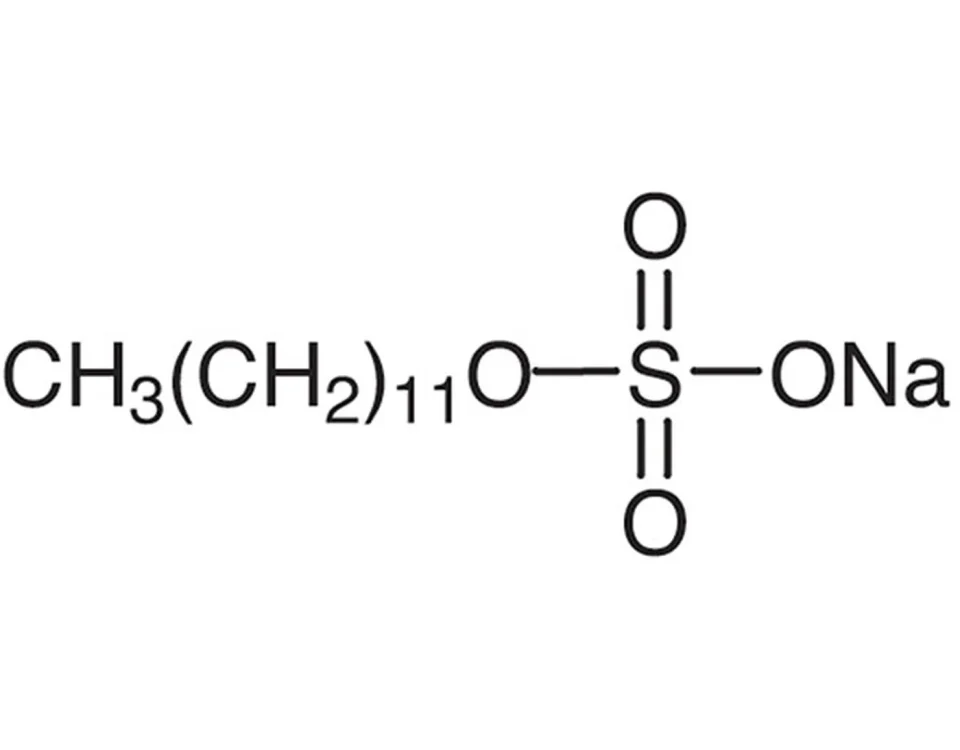
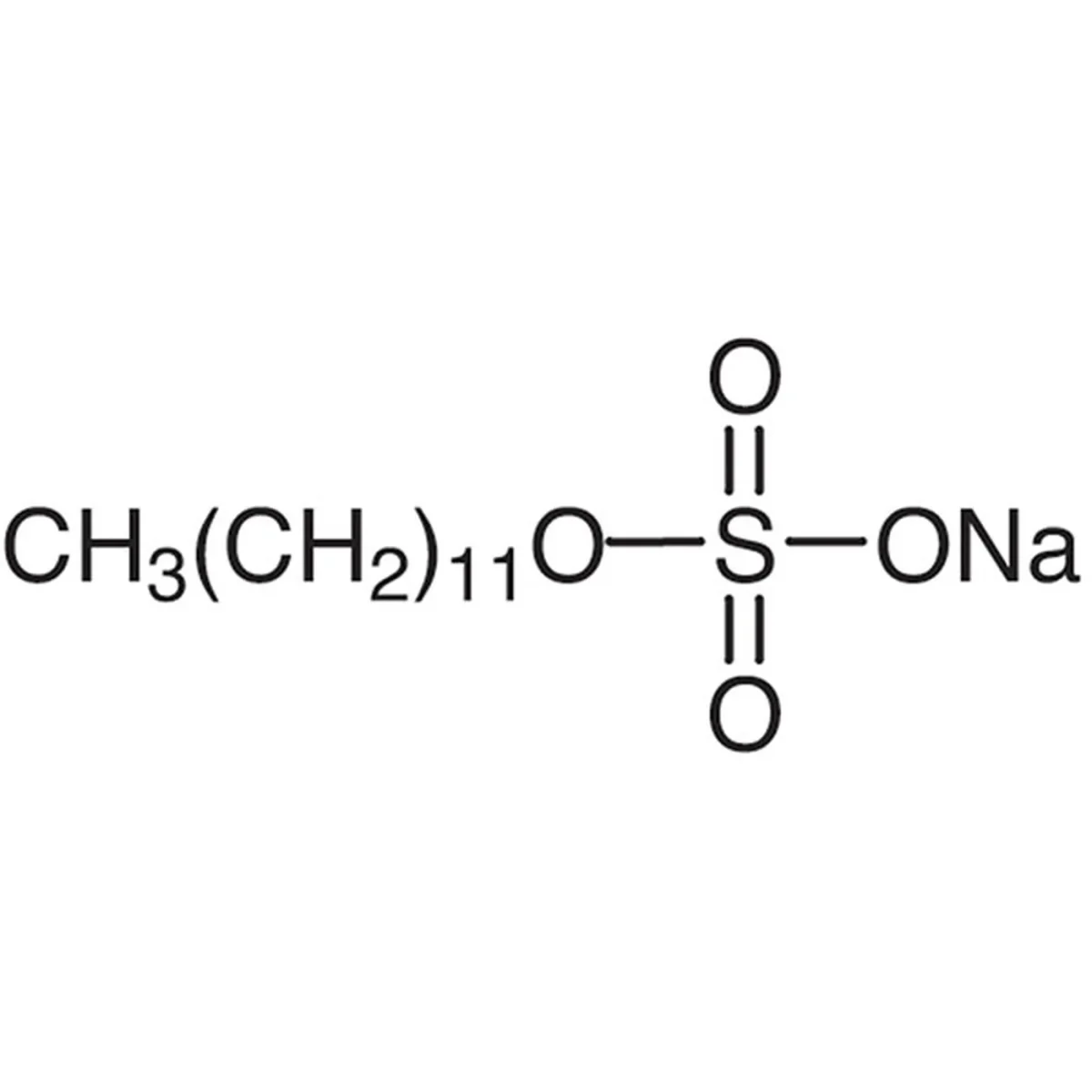
| Substance | CAS 151-21-3, C12H25NaO4S |
Send your process temperature range to contact our team and request a quote or request a sample before a drying trial.
Short answer: Sodium dodecyl sulfate has no usable boiling point at atmospheric pressure. It is an ionic solid that decomposes on strong heating before it can boil. Published values around 204-207 °C describe melting with decomposition, not a boiling transition. For plant work, drying temperature, storage range and Krafft point are the numbers that matter.
Key takeaways
- SDS is an ionic solid that decomposes on strong heating; it has no normal boiling point.
- Figures around 204-207 °C refer to melting with decomposition, and depend on the test method.
- Drying temperature, storage range and Krafft point are the plant-relevant thermal numbers.
- Keep powder sealed and below the recommended storage temperature to limit caking.
- Ask for the test method behind any thermal value before putting it in a process spec.
Does sodium dodecyl sulfate actually reach a boil?
An ionic salt with a sulfate head group does not behave like a solvent. Heating a dry C12H25NaO4S solid first drives off residual water, then the ester linkage begins to break down. A boiling point requires a liquid-vapour equilibrium at a defined pressure, and this substance does not get there under normal conditions. A datasheet that lists a single boiling temperature for SDS deserves a second look.
What a decomposition figure means
Decomposition is a chemical change, not a phase change. The sample loses mass and changes composition, so the number depends on heating rate and the instrument used. Treat any quoted onset as illustrative and ask for the test method.
Thermal figures you may see on a supplier sheet
Literature and supplier sheets mention a melting region above 200 °C accompanied by decomposition, a bulk density well below 1 g/cm3 for needle powder, and a Krafft point in the teens Celsius for aqueous solutions. None of these is a boiling point. The table below groups them by what each one is used for. Values are illustrative working figures; the binding numbers sit on the current TDS and lot COA.
| Property | Illustrative value | What it governs | Where it is used |
|---|---|---|---|
| Melting with decomposition | approx. 204-207 °C | Upper thermal limit | Drying and hot-room design |
| Bulk density, needle powder | approx. 0.3-0.6 g/cm3 | Volume per tonne | Bag and silo sizing |
| Krafft point in water | approx. 16 °C (literature) | Dissolution onset | Cold-water blending |
| Recommended dry storage | below 30 °C (illustrative) | Caking and stability | Warehouse practice |
Drying temperature matters more than a boiling number
Powder plants sometimes re-dry incoming material before milling. Keep the product temperature well under the decomposition region and avoid hot spots on heated surfaces, since local overheating can darken the powder and raise unsulfated matter. A fluidised dryer with good air distribution does a better job than a high-temperature tray oven. Our SLS powder grades are shipped dry; re-drying is usually unnecessary if bags have been stored closed.
Krafft point is the practical low-temperature figure
Below its Krafft point the surfactant crystallises out of solution instead of forming micelles. That is why a 30% liquid grade can turn cloudy in an unheated warehouse in a cold season, while a warm-room tank stays clear. Our note on CMC and Krafft point walks through how the two numbers are used when a formula is built for cold water. SLS 30% solution is the grade most often asked about in this context.
Storage and handling in a warm warehouse
Keep bags sealed, off the floor and away from direct sun. Needle powder picks up moisture, and caking follows. Buyers in India, Pakistan, Iran, Russia and Southeast Asia normally ask for the recommended storage range on the TDS before booking a vessel, because container temperatures can climb well above ambient. Contact our team with your route and we will confirm current packing and storage advice.
How to read a thermal claim on a competitor TDS
Ask three questions. Was the number measured on the pure substance or on a formulated grade? Does the sheet say melting, decomposition or boiling? Which test method and heating rate were used? A COA reading guide helps separate measured analytical values from copied catalogue text, and SDS 97% shows the specification lines we issue per lot.
For adjacent products see SLS 92% powder, SLS 93% powder, SLS 94% powder.
Frequently asked questions
Can I use a boiling point to set my dryer temperature?
No. Use the decomposition onset and the storage recommendation on the TDS instead, and keep a wide margin below them. A boiling point for this salt would not describe the process.
Why did my SDS powder darken after oven drying?
Local overheating can start decomposition even when the average air temperature looks safe. Check for hot spots on trays or heating elements and reduce the product temperature.
Is a 30% solution affected by the same thermal limit?
Water dominates the solution behaviour. Cloudiness in cold storage is usually a Krafft point effect, while prolonged high temperature can slowly change the ester. Ask for the recommended range on the grade TDS.
Does the decomposition temperature differ between 92% and 99% grades?
The surfactant molecule is the same, but impurities and moisture shift measured onsets. Ask for a method-specific value on the grade you are buying rather than transferring a literature figure.
Which thermal documents should I request with a quote?
A current TDS with storage range, a lot COA showing moisture and active matter, and the MSDS handling section. Request the COA/MSDS with the grade name.
Request a quote or a sample
For bulk pricing, MOQ and lead time on heat-sensitive SDS grades, request a quote with your process temperature range. Request a sample for drying trials and request the COA/MSDS to check moisture and storage limits.
Written and reviewed by the ORID Chem technical team. Last updated: 20 November 2026. Figures marked illustrative are working values, not quotations. Confirm current specifications on the product TDS and lot COA before ordering.