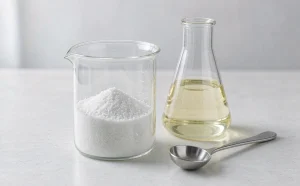
Short answer: SOS is the C8 cousin of SLS: four carbons shorter, molecular weight 232.27 against 288.38, micellizing near 130 mM against 8.2 mM. It needs a heavier dose for the same surface work but stays in solution in cold water where SLS clouds near 16 C. It ships as a 35-40% aqueous solution, so freight per kilogram of active matter is high.
This comparison is written for formulators and buyers weighing SOS, sodium octyl sulfate (CAS 142-31-4), against the SLS grades we sell. Literature values for CMC and Krafft point vary with purity and method, so treat them as orientation rather than specification. Prices are illustrative working numbers, not quotations.
What changes when you drop four carbons?
Chain length is the whole difference. Sodium octyl sulfate carries eight carbons (C8H17NaO4S, molecular weight 232.27) against twelve in SLS (C12H25NaO4S, molecular weight 288.38). The shorter tail changes three things that matter on the plant floor: the molecule micellizes far later, it stays dissolved far colder, and it delivers less surface work per gram.
The micellization gap is the headline. Literature values put the CMC of SOS at roughly 130 mM at 25 C, against about 8.2 mM for SLS. Matching CMC on paper means 30.2 g/L of SOS against 2.4 g/L of SLS, and that arithmetic explains why SOS is never a drop-in substitute at equal weight. Practical dosing does not follow the CMC ratio, because performance matching is not a micellization calculation; bench trials are the only honest way to set a dose.
SOS vs SLS: how do the grades compare?
| Property | SOS, CAS 142-31-4 | SLS, CAS 151-21-3 |
|---|---|---|
| Chain length | C8 | C12 |
| Molecular weight | 232.27 | 288.38 |
| Commercial form | 35-40% aqueous solution | 92-95% powder, also a 30% solution |
| CMC at 25 C, literature | About 130 mM | About 8.2 mM |
| Krafft point | Below room temperature | About 16 C |
| Unsulfated matter, our spec | At or below 1.0% | Per lot COA |
| Illustrative price | 2.20 USD per kg of solution | 1.80 USD per kg of SLS 95% powder |
Note the form difference before the price. SOS is supplied as a 35-40% solution, so a tonne of product carries only 350-400 kg of active matter. At an illustrative 2.20 USD per kg of solution, that is 5.50 to 6.29 USD per kg of active matter before freight. The liquid also drags water through your warehouse and your customs entry, the same penalty our liquid versus powder freight comparison works through for SLS 30%.
Where does SOS earn its place?
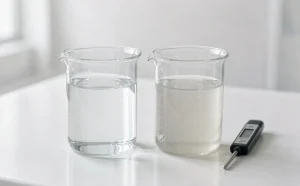
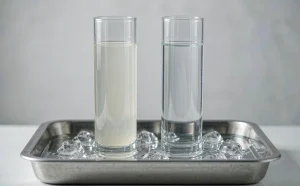
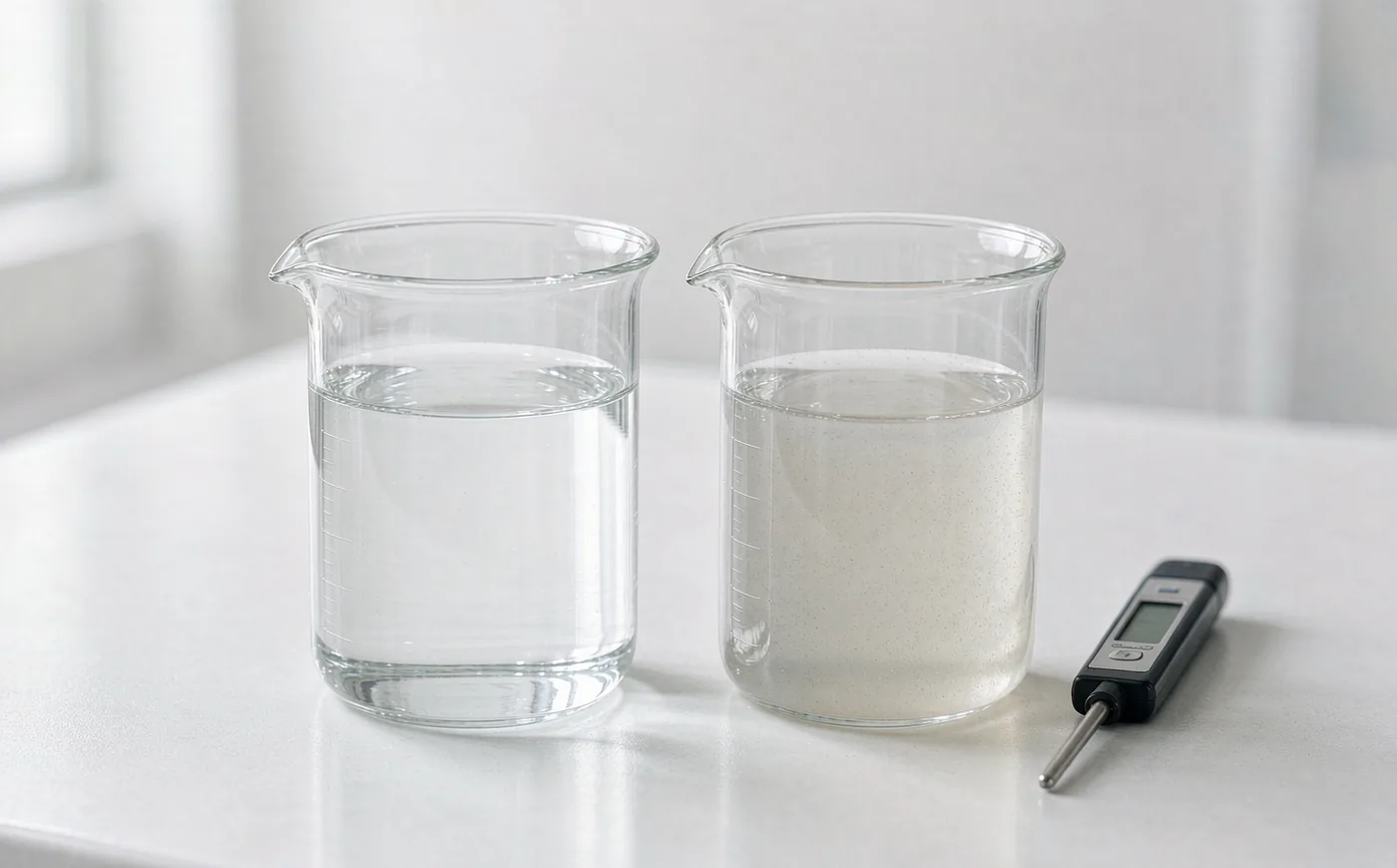
Cold water is the first case. SLS clouds and eventually gels once temperature drops toward its Krafft point near 16 C, which is why winter storage and cold routes are a recurring problem for powder and 30% liquid grades. SOS stays clear in the same conditions, so it suits cold-water formulations, winter production and unheated storage. Our winter clouding and freezing guide covers the checks.
Electrolyte-heavy systems are the second. Where a formula carries heavy salt or hydrotrope loads, the shorter chain stays in solution longer before salting out. That makes SOS useful in concentrated premixes and in process water with high dissolved solids.
Polymerisation is the third. SOS works as an emulsifier where the reaction runs cold or the latex needs to survive freeze-thaw, the same duty LDS covers at a higher price. The chain-length family also gives you options in between: sodium decyl sulfate (CAS 142-87-0) sits at C10 and is likewise supplied as a 35-40% solution, and counterion variants such as potassium dodecyl sulphate and magnesium dodecyl sulfate are quoted for specific protocols.
How do I set the dose and check the cost?
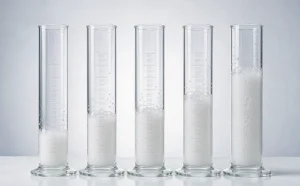
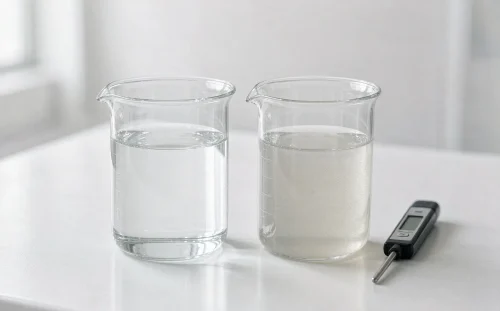
Start from the application, not from the CMC. For a foam or wetting duty, prepare 0.25%, 0.5% and 1.0% active solutions of both salts and run the same bench test on both; the ratio that comes out of your own test beats any literature figure. For a cold-water duty, chill both solutions to the target temperature and watch for clouding before you compare performance.
Then do the cost arithmetic on active matter. The formula is product price divided by the active fraction, exactly as in our worked cost example. A 35-40% SOS solution at an illustrative 2.20 USD per kg works out to 5.50-6.29 USD per kg of active matter, against about 1.90 USD for SLS 95% powder. If the application tolerates SLS at the running temperature, the powder is the rational buy; if the line runs cold, SOS is doing a job the cheaper salt cannot.
Key takeaways
- Chain length: SOS is C8, MW 232.27; SLS is C12, MW 288.38. The tail length drives every other difference.
- Micellisation: literature CMC about 130 mM for SOS against 8.2 mM for SLS, so equal-weight substitution underperforms.
- Cold behaviour: SOS stays in solution where SLS clouds near 16 C; that is the duty it is bought for.
- Cost basis: the 35-40% solution form puts SOS at 5.50-6.29 USD per kg of active matter at illustrative prices, before freight.
- Method: set dose by bench trial at the running temperature, not by CMC arithmetic.
Frequently asked questions
Is SOS just a weaker SLS?
No. It is a different chain length with a different solubility profile. SOS is weaker per gram at room temperature and stronger where cold water or heavy electrolytes rule out SLS. Grade the job, then pick the salt.
Can I swap SOS for SLS gram for gram?
Not reliably. Micellisation and surface work per gram differ by a wide margin, and the solution form changes the water balance of the formula. Dose on active matter and re-run foam, wetting and stability trials after the switch.
Is SOS used in personal care?
Shorter-chain sulfates appear in some rinse-off systems where high solubility matters. Check the TDS for purity and run your own safety assessment for the finished product; our spec sheet covers the parameters we control.
How should the SOS solution be stored?
Keep drums sealed in a cool, dry place per the TDS. The solution is completely miscible with water, so lines and pumps rinse clean. Avoid long storage at high temperature and protect from contamination.
What are the MOQ and lead time for SOS?
Both depend on destination and packing. Our MOQ and lead time FAQ pages give the standard answers, and the team confirms the exact figures against your port.
Request a quote or a sample
For bulk pricing, MOQ and lead time on SOS or the SLS 95% grades, request a quote with your destination port and annual volume. If the line runs cold or the water carries heavy salts, request a sample and run the side-by-side bench trial at your running temperature. You can request the COA and MSDS for either grade before you commit, or contact our team with your formula constraints and we will confirm which chain length fits.
Written and reviewed by the ORID Chem technical team. Last updated: 11 November 2026. CMC and Krafft point values are literature observations, not guaranteed specifications, and prices are illustrative working numbers. Confirm current specifications on the product TDS and lot COA before ordering.