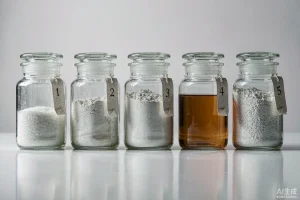
Short answer: Six anionic surfactants cover most industrial buying decisions: SLS (sodium lauryl sulfate, CAS 151-21-3) for foam and detergency at the lowest cost per kilogram of active matter, SLES (sodium laureth sulfate, CAS 68585-34-2) for mildness and easy salt thickening in liquids, AOS (sodium C14-16 olefin sulfonate, CAS 68439-57-6) for hard-water stability and sulfate-free positioning, LDS (lithium dodecyl sulfate, CAS 2044-56-6) for low-temperature laboratory work, and SVS (CAS 3039-83-6) plus SSS (CAS 2695-37-6) as reactive sulfonate monomers for polymers. Which one you need depends on your water hardness, product format, foam profile and regulatory claims.
This guide is written for formulators and procurement teams who already know they need an anionic surfactant and now have to choose between them. Every value in the tables below is a typical commercial specification, not a guaranteed number — your final specification should come from the supplier’s current technical data sheet (TDS) and certificate of analysis (COA).
The six anionic surfactants at a glance
| Name | Chemistry | CAS number | Typical commercial forms | Typical active content | Where it wins |
|---|---|---|---|---|---|
| SLS (sodium lauryl sulfate / sodium dodecyl sulfate / K12) | Alkyl sulfate, C12-dominant | 151-21-3 | Powder, needles, 30% liquid | 92–95% (solids), 30% (liquid), 97–99% (high purity) | Lowest cost per kg of active matter, high foam, strong detergency |
| SLES (sodium laureth sulfate) | Alkyl ether sulfate (ethoxylated) | 68585-34-2 | 70% paste | 70% | Mildness, salt thickening, electrolyte tolerance in liquids |
| AOS (sodium C14-16 olefin sulfonate) | Alpha olefin sulfonate | 68439-57-6 | Powder, liquid | 92% / 95% (powder), 35% / 38% (liquid) | Hard-water stability, hydrolysis stability, sulfate-free claims |
| LDS (lithium dodecyl sulfate) | Alkyl sulfate, lithium salt | 2044-56-6 | Powder | High purity grades | Stays in solution at low temperature; electrophoresis and biochemistry |
| SVS (sodium vinylsulfonate) | Reactive vinyl sulfonate monomer | 3039-83-6 | Liquid / powder | Varies by grade | Polymerizable sulfonate for dyeing auxiliaries, adhesives, dispersants |
| SSS (sodium p-styrenesulfonate) | Reactive styrenic sulfonate monomer | 2695-37-6 | Powder | Varies by grade | Polymer modification, conductive and dispersant polymers |
Key takeaways
- Cost: SLS is usually the cheapest route to foam and detergency. Compare offers on cost per kilogram of active matter, not on price per kilogram of product.
- Water hardness: sulfate esters (SLS, SLES) lose efficiency in very hard water; sulfonates (AOS) hold up far better. If you sell into hard-water markets, start with AOS.
- Product format: powders and needles favour SLS and AOS; liquids favour SLES 70% and AOS 35/38%.
- Claim strategy: AOS contains no sulfate ester group, which is why it appears in many “sulfate-free” formulations — confirm the claim with your regulatory team before launch.
- Specialties: LDS, SVS and SSS are low-volume, high-value products where documentation and purity matter more than price per ton.
How each surfactant behaves in a real formulation
SLS — the cost and foam benchmark
Sodium lauryl sulfate (SLS CAS 151-21-3) is the reference point for anionic performance. It delivers fast, high flash foam and strong detergency, it is available as powder, needles and 30% liquid, and it is the standard choice for laundry powders, scouring powders, toothpastes and industrial cleaners. The two limits to plan around are water hardness and low-temperature solubility: in very hard water the foam drops unless the formula carries enough builders or chelants, and solutions can cloud at low temperatures.
Grade selection is mostly about active content. Our comparison of SLS 92% vs 93% vs 94% vs 95% shows that detergents and industrial cleaners usually run on 92%, while toothpaste and premium personal care specify 95% or higher for odour, colour and taste reasons.
SLES — mildness and easy thickening
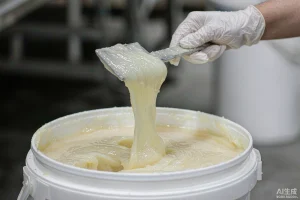
Sodium laureth sulfate (SLES CAS 68585-34-2) is SLS that has been ethoxylated. That single change makes it milder on skin, more tolerant of electrolytes and easier to thicken with salt, which is why shampoos, body washes and hand dishwashing liquids are built on SLES 70%. It is supplied as a 70% paste, so it is a liquid-handling product: pumps, heated storage in cold climates and 1,4-dioxane control all matter. See the SLES 70% buyer’s guide for specifications and packaging.
AOS — the hard-water problem solver
Sodium C14-16 olefin sulfonate (AOS CAS 68439-57-6) is a sulfonate rather than a sulfate ester. The carbon–sulfur bond makes it stable across a wider pH range and much less sensitive to calcium and magnesium. It gives fast foam, good detergency and ready biodegradability, which is why it is used in laundry powders and tablets, dishwashing liquids and hard-water markets. Powder grades are typically 92% and 95%, liquids 35% and 38%; the AOS buyer’s guide covers the choice in detail.
LDS — the cold-temperature specialty
Lithium dodecyl sulfate (LDS CAS 2044-56-6) is the lithium salt of the same C12 sulfate. The lithium counterion keeps it soluble at low temperature, which is the reason laboratories use it when SDS would precipitate out of a cold buffer. Volumes are small and purity requirements are high.
SVS and SSS — reactive monomers, not detergents
Sodium vinylsulfonate (SVS CAS 3039-83-6) and sodium p-styrenesulfonate (SSS CAS 2695-37-6) are bought for the polymerizable double bond, not for foam. They introduce sulfonate groups into polymers used as dyeing auxiliaries, dispersants, adhesives and specialty resins. Buyers here care about assay, inhibitor content and polymerisation performance.
Selection matrix: pick by situation
| Your situation | Recommended primary surfactant | Why |
|---|---|---|
| Standard laundry powder, cost-driven market | SLS 92% powder | Lowest active-matter cost, high foam, proven in spray-dried and agglomerated powders |
| Laundry powder sold in hard-water regions | AOS 92% or 95% powder | Holds foam and detergency where calcium levels are high |
| Shampoo, body wash or hand dishwashing liquid | SLES 70% | Mild, salt-thickenable, easy to process |
| “Sulfate-free” positioning | AOS 35% or 38% liquid | Sulfonate chemistry with no sulfate ester group |
| Toothpaste or pharmaceutical grade | SLS 95% or high-purity 97–99% SDS | Tighter impurity profile for taste, colour and compliance |
| Electrophoresis or cold-temperature buffers | LDS or electrophoresis-grade SDS | Remains soluble when SDS precipitates |
| Polymer or dispersant synthesis | SVS or SSS | Reactive sulfonate monomer functionality |
What to confirm before you order
- Active matter and the test method used (typically two-phase titration for anionics) — see how to read an SLS certificate of analysis.
- Physical form and bulk density, especially for automatic dosing and pneumatic conveying: SLS needles vs powder.
- Impurity profile: unsulfated matter, salts, moisture, colour and heavy metals for personal care and oral care grades.
- Documentation set per lot: COA, TDS and safety data sheet in the language of the destination market.
- Supplier capability and change control — the questions in our supplier checklist apply to every product in this table.
Frequently asked questions
Which anionic surfactant is cheapest per kilogram of active matter?
In most markets SLS 92% is the lowest-cost anionic surfactant per kilogram of active matter, which is why it remains the workhorse of detergent powders. Always calculate cost on active matter rather than on the drum or bag price, especially when comparing powder with 30% or 70% liquid grades that ship a lot of water.
Is AOS a sulfate?
No. AOS is an olefin sulfonate: the sulfur atom is bonded directly to carbon, whereas SLS and SLES are sulfate esters bonded through oxygen. This is why AOS is widely used in formulations positioned as sulfate-free, and why it is more stable across pH and in hard water.
Can SLES replace SLS one-for-one?
Not directly. SLES is milder and more electrolyte-tolerant, and it thickens with salt, but it foams and cleans differently and it is supplied as a 70% paste rather than a powder. Most formulators use it as the primary surfactant in liquids and keep a smaller level of a foam booster or secondary surfactant.
Which surfactant should I use if my market has very hard water?
Start with AOS. Sulfonates keep their foam and detergency in water with high calcium and magnesium levels, where sulfate esters lose efficiency. If you must stay on SLS, load enough builders or chelating agents to bind the hardness ions.
Do SVS and SSS work as detergents?
No. They are reactive sulfonate monomers bought for polymerisation and polymer modification — dyeing auxiliaries, dispersants, adhesives and specialty resins — not for cleaning performance.
Written and reviewed by the ORID Chem technical team. Last updated: 29 September 2026. Specifications in this article are typical commercial values; confirm current values on the product TDS and lot COA before ordering.