Short answer: Two surfactant quotes are only comparable after you convert both to cost per kilogram of active matter and then add freight, packaging and duty. The formula is simple: cost per kg of active matter = price per kg ÷ (active content % ÷ 100). A grade that looks cheaper per bag is often more expensive once you divide by active content and add the freight on the water it carries.
This guide shows procurement teams how to normalise surfactant quotes, with worked examples for SLS 92% vs SLS 95% and for powder vs 30% liquid. All prices below are illustrative figures used to demonstrate the method — they are not quotations and not market price guidance. For what actually moves SLS prices, see our SLS price guide 2026.
Key takeaways
- Never compare bag prices. Compare cost per kilogram of active matter.
- Liquid grades carry 70% water — the freight line, not the product line, is where they lose.
- A 3-point difference in active content changes the real cost by roughly the same percentage as the price gap, not more.
- Ask every supplier for the same five things: Incoterm, active content and method, packaging, validity, and document set.
- A cheap quote without a lot COA, retained samples and change control is a risk, not a saving.
Step 1: convert every quote to active matter
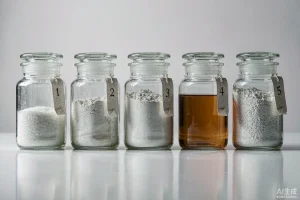
Surfactants are sold at different concentrations. SLS powder is typically 92–95% active, SLS liquid is 30%, SLES is 70%, AOS powder is 92–95% and AOS liquid is 35–38%. Dividing the price by the active fraction puts them all on one scale.
| Quote (illustrative) | Price | Active content | Cost per kg of active matter |
|---|---|---|---|
| SLS 92% powder, FOB | USD 1,520 / MT | 92% | 1,520 ÷ 0.92 = USD 1,652 / MT |
| SLS 95% powder, FOB | USD 1,610 / MT | 95% | 1,610 ÷ 0.95 = USD 1,695 / MT |
| SLS 30% liquid, FOB | USD 520 / MT | 30% | 520 ÷ 0.30 = USD 1,733 / MT |
Read the first two rows carefully. The 95% grade costs about 6% more per ton of product, but only about 2.6% more per kilogram of active matter — because you are buying more functional surfactant in each bag. That gap is often smaller than buyers expect, and it is usually worth paying when the cleaner impurity profile matters for colour, odour or taste.
Step 2: add the freight that comes with the water
Active matter fixes the product comparison; freight fixes the logistics comparison. To deliver one ton of active surfactant as SLS 30% liquid you ship about 3.33 tons of material. As 92% powder you ship about 1.09 tons. In a container that is volume-limited rather than weight-limited, the difference is even larger.
| Format | Tons shipped per ton of active matter | Practical consequence |
|---|---|---|
| SLS 92% powder or needles | ≈ 1.09 | Freight close to product weight; standard 20/25 kg bags on pallets |
| SLES 70% paste | ≈ 1.43 | Drums or IBCs; heated storage may be needed in cold climates |
| SLS 30% liquid | ≈ 3.33 | Three times the freight and tank or IBC handling on both ends |
Rule of thumb: liquid grades only win when your plant is already set up to handle liquids and the supplier is close to your factory. If you are importing across continents, powder or needles almost always land cheaper per kilogram of active matter, even when the liquid looks dramatically cheaper per ton.
Step 3: normalise the commercial terms
A quote is more than a number. Before you put two offers side by side, make sure these seven items match:
- Incoterm — FOB, CFR, CIF or DAP. An FOB price from Asia and a DAP price to your door are not comparable until you add freight, insurance and destination charges.
- Price basis — per metric ton, per kilogram, or per bag. Convert everything to a single unit.
- Active content and test method — the number and how it was measured (two-phase titration is standard for anionics).
- Packaging — bag size, liner, palletisation, and whether pallets are included. See how SLS is packaged for export.
- Validity — how long the price holds. Surfactant prices track feedstock and freight markets.
- Payment terms — T/T, L/C at sight or usance. Payment cost is a real cost.
- Document set — COA per lot, TDS, SDS in the destination language, and certificate of origin if you claim preferential duty.
Step 4: price the risk, not just the product
The cheapest quote is expensive if the lot fails at your receiving gate. Before awarding an order, ask each supplier the same four questions:
- Do you issue a COA per lot whose lot number matches the markings on the bags? (What to check on a COA)
- Do you keep retained samples for each lot, and for how long?
- Do you notify customers before changing a specification, a raw material source or a production site?
- Can you support third-party inspection (SGS, Bureau Veritas, Intertek) before shipment?
The full version of this evaluation is in our procurement checklist for SLS suppliers. It applies unchanged to SLES, AOS and the specialty grades.
Worked example: 20 tons of SLS for a detergent plant
A plant needs 20 tons of SLS active matter. Three offers arrive:
- Offer A: SLS 92% powder, USD 1,520/MT FOB, 25 kg bags, 24 tons shipped (20 ÷ 0.92), 16–20 tons per 20-foot container.
- Offer B: SLS 95% powder, USD 1,610/MT FOB, 25 kg bags, 21.1 tons shipped (20 ÷ 0.95).
- Offer C: SLS 30% liquid, USD 520/MT FOB, IBCs, 66.7 tons shipped (20 ÷ 0.30).
On active matter alone: A = USD 33,040, B = USD 33,900, C = USD 34,660. On freight, C requires roughly three times the shipped volume of A, which normally adds more than the USD 1,600 product difference — before counting tank or IBC handling. In this scenario A is cheapest and B costs about 2.6% more for a cleaner grade; C only makes sense if the plant already handles liquid and the supplier is nearby.
Frequently asked questions
Is a higher active content always worth the extra price?
Not always, but more often than buyers assume. Convert both grades to cost per kilogram of active matter. If the premium is a few percent, the cleaner impurity profile — lower unsulfated alcohol, salts and colour — is usually worth it in personal care, oral care and any application where odour or colour shows up in the finished product.
Why is liquid SLS cheaper per ton but expensive to import?
Because roughly 70% of the shipment is water. You pay freight, handling and packaging for water, then store a product that can cloud at low temperature. Liquid wins on handling convenience, not on landed cost over long distances.
Should I buy SLES 70% or SLS powder for a liquid detergent?
For a liquid product, SLES 70% is usually the practical base because it dissolves easily and thickens with salt. Buy SLS powder when the formulation is a powder, or when you need SLS chemistry specifically and have dissolution capacity. Compare both on active matter plus freight before deciding.
How do I compare an FOB quote with a CIF quote?
Add ocean freight, insurance and destination terminal charges to the FOB price, or ask the supplier to quote both on the same Incoterm. Also check whether the CIF quote includes the same packaging and document set.
What is the single most common mistake in surfactant purchasing?
Comparing price per ton instead of cost per kilogram of active matter. It is the reason a 30% liquid at USD 520/MT can be more expensive to use than a 92% powder at USD 1,520/MT.
Written and reviewed by the ORID Chem technical team. Last updated: 29 September 2026. Prices and freight assumptions in this article are illustrative examples for calculation purposes only and do not constitute an offer or market price guidance. Request a current quotation for live pricing.